

My friends, countrymen, lend me your ears. Just last Friday, as I stood at the dais of the University of Education, Winneba, ready to be crowned with a doctoral hood after years of toil, a single burning question chased itself in my mind.
It was the same question I whispered to a colleague who had chased this same honour for seven long years.
Is Ghana a Christian state? An Islamic state? Or a traditional state?
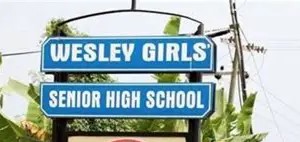
The answer, my people, is found not in a lecture hall, but in a lawsuit shaking the gates of Wesley Girls’ High School. It is a story of a key, an old lock, and a door that must be opened.
The key is a simple, faithful request from a Muslim student: “Let me fast during Ramadan. Let me pray to my God in my way.” The lock? It is the school’s old, strong rule: “You are in John Wesley’s house. Here, we follow our Christian traditions. You will attend our church services.” The message is clear: When you enter this family, you leave Brother Mohammed’s doctrines at the gate.
This key has now been forged into a legal case. And the sound of its turning is rattling the very foundations of education in Ghana. Why? Because this is not just about one girl or one school. It is about a ghost, a colonial ghost, that has lived in our famous schools like Wesley Girls’, Presec, T.I. Ahmadiyah, St. Augustines and many others for generations. You see, these schools were built by missionaries. They came with good hearts and books, but also with a mission: to change us. They taught us that to be educated, to be ‘civilised,’ was to be like them. To sing their hymns, wear their clothes, and worship their God. We were so hungry for their knowledge that we swallowed their spiritual rules without chewing.
That is the ghost in our system: the idea that a first-class education must cost you your own faith. But then, we grew up! We became a nation. We wrote our own rulebook, the 1992 Constitution. And in it, we made a powerful promise to ourselves: Every single person in Ghana shall have the freedom to worship as they please. So here is the problem, the great Ghanaian contradiction. Our government, using our taxes, helps to pay for these missionary schools. We are all buying the chair. But when our children go to sit on it, they are told, “Sit only this way. Pray only this way.”
This brave student’s case is forcing us to answer a simple but deep question: Whose Ghana is this?
Is it a Ghana where a brilliant child must hide her faith to enter a top school? Or is it a Ghana where our classrooms reflect the beautiful, colourful diversity of our nation, where a Christian, a Muslim, and others can learn side-by-side, each respecting the other’s path to God? Let us be clear. This lawsuit, I believe is not an attack on the Methodist church or its good works. It is a call to update the rules. It is a call to make our schools truly, wholly Ghanaian. I am afraid the outcome of this suit will also not open the flood gates for other faiths to initiate moves. We can honour the history of these great institutions without forcing every child into a single spiritual mould. The same spirit of inclusion must apply to our Muslim schools as well. This, we have managed over the years.
The student at the heart of this storm is more than a student. She is a messenger. Her message is that the soul of Ghana is rich and multi-coloured. Our schools should be a place to celebrate that beautiful diversity, not to suppress it. My people, the time has come. Let us open the door. Let us change the lock. Let us build an education system where no child in Ghana has to choose between their faith and their future.
That is the real meaning of freedom. And that is a degree worth fighting for. I am a proud WESLEYAN of St. PAUL’S METHODIST, Agona.
By Omankyeame Nana Yaw Ofori, PhD.
_omankyeamenanayawofori@gmail.com._